Cryptocurrency payments are becoming more common in online business. As adoption grows, merchants are looking for solutions that give them flexibility without sacrificing control. This is where Non-custodial crypto payment processors enter the conversation.
Unlike traditional crypto payment platforms that hold funds on behalf of merchants, non-custodial systems allow businesses to receive payments directly into their own wallets. That difference may sound technical, but in practice, it changes everything — from security to ownership and risk management.
This guide explains how non-custodial crypto payment processors work, why they matter, and whether they make sense for your business. No hype, no promises — just a practical breakdown.
What Are Non-Custodial Crypto Payment Processors?
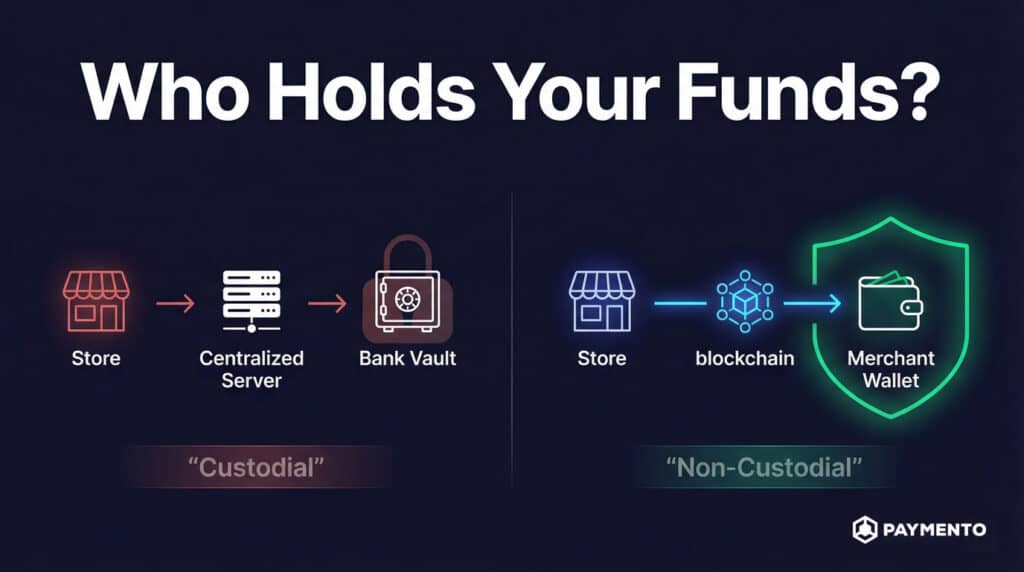
To understand non-custodial crypto payment processors, it helps to compare them to custodial systems. In a custodial setup, a third-party company holds your crypto funds temporarily or permanently. You rely on that provider to manage wallet security and process withdrawals.
A non-custodial processor works differently. Payments go directly to a wallet controlled by you. The processor facilitates the transaction, generates payment addresses, and verifies confirmations — but it never holds your funds.
In simple terms, the difference comes down to one idea:
- Custodial = the provider controls your funds
- Non-custodial = you control your funds
That control can significantly reduce counterparty risk, especially in an industry where exchange failures and frozen accounts have occurred in the past.
Why Businesses Are Considering Non-Custodial Solutions
Control and security are major concerns in crypto. Businesses accepting digital assets often ask a simple question: “Who holds the money?”
With non-custodial crypto payment processors, merchants maintain full ownership of their assets. There’s no need to trust a third party to safeguard balances or release withdrawals. Funds settle directly to the merchant’s wallet, reducing dependency on external platforms.
This approach can be particularly appealing for:
- Online stores operating internationally
- Digital service providers
- Businesses prioritizing financial sovereignty
For companies that value decentralization and autonomy, non-custodial processing aligns closely with the original philosophy of cryptocurrency.
How Non-Custodial Crypto Payment Processors Work
From the customer’s perspective, the checkout experience looks familiar. They select crypto as a payment option, scan a QR code or copy a wallet address, and confirm the transaction.
Behind the scenes, the processor generates a unique address for the order and monitors the blockchain for payment confirmation. Once the required confirmations are complete, the merchant is notified. The key distinction is that the payment goes directly to the merchant’s wallet — not to the processor’s custody.
Because the processor does not store private keys or manage balances, the merchant remains fully responsible for wallet security. That responsibility is both a benefit and a consideration.
Key Benefits of Non-Custodial Crypto Payment Processors
The advantages of non-custodial crypto payment processors revolve around autonomy and risk reduction.
First, there is reduced counterparty risk. If a payment processor experiences financial trouble, your funds are not locked within their system because they were never held there.
Second, there is improved transparency. Transactions are recorded on the blockchain and verifiable independently, without relying on a centralized ledger.
Third, there is greater alignment with decentralization principles. Businesses that want to operate in a more permissionless and open financial environment often prefer non-custodial systems.
However, these benefits come with added responsibility. Wallet management, private key storage, and operational security must be handled carefully.
Security Considerations for Merchants
Security is central when using non-custodial crypto payment processors. Since funds are not held by a third party, the merchant must ensure proper wallet management.
This typically involves secure private key storage, possibly using hardware wallets or multisignature setups. Backup procedures must be clear and tested. Unlike traditional banks, there is no customer support line to recover lost keys.
For many businesses, this responsibility is manageable with the right tools and processes. For others, especially those without technical support, it may feel like a barrier.
Understanding your internal capabilities is essential before choosing a non-custodial solution.
Non-Custodial vs. Custodial: A Balanced Comparison
Custodial processors offer simplicity. They manage wallets, conversions, and sometimes regulatory compliance. This can reduce operational complexity, especially for small teams.
Non-custodial crypto payment processors, on the other hand, prioritize control and ownership. They remove reliance on third-party custody but require more active management from the merchant.
The decision is not about which model is universally better. It depends on your business priorities, technical capacity, and risk tolerance. Some businesses even use hybrid approaches, combining custodial and non-custodial systems depending on transaction type.
Regulatory and Compliance Awareness
Crypto regulation continues to evolve globally. Even though non-custodial crypto payment processors do not hold funds, merchants must still consider tax reporting, accounting practices, and local compliance requirements.
Receiving crypto directly into a self-controlled wallet does not remove legal responsibilities. Businesses should consult financial and legal professionals to ensure proper record-keeping and reporting.
Transparency and compliance build long-term sustainability.
Who Should Consider Non-Custodial Crypto Payment Processors?
Non-custodial solutions may be especially suitable for businesses that, value financial independence, have technical resources for wallet security and want to minimize exposure to third-party custodians
They may be less suitable for businesses seeking a fully managed, hands-off experience.
Choosing the right payment infrastructure is not about trends. It’s about alignment with operational capacity and long-term strategy.
The Future of Non-Custodial Crypto Payments
As the crypto ecosystem matures, decentralization continues to shape innovation. Non-custodial crypto payment processors reflect a broader movement toward self-custody and financial autonomy.
At the same time, usability improvements are making these systems more accessible. Wallet interfaces are becoming simpler, integrations smoother, and educational resources more widespread.
Adoption is likely to grow steadily, especially among businesses comfortable operating in digital-native environments.
Conclusion: Control Comes With Responsibility
Non-custodial crypto payment processors offer a compelling model for businesses that prioritize control, transparency, and reduced counterparty risk. By sending payments directly to merchant-controlled wallets, they eliminate the need to trust third-party custody.
However, greater control also means greater responsibility. Secure wallet management, regulatory awareness, and operational discipline are essential.
For the right business, non-custodial processing can provide autonomy and resilience in a rapidly evolving financial landscape. For others, a custodial or hybrid approach may be more practical.
The key is understanding your priorities — and choosing a system that supports them without unnecessary complexity.