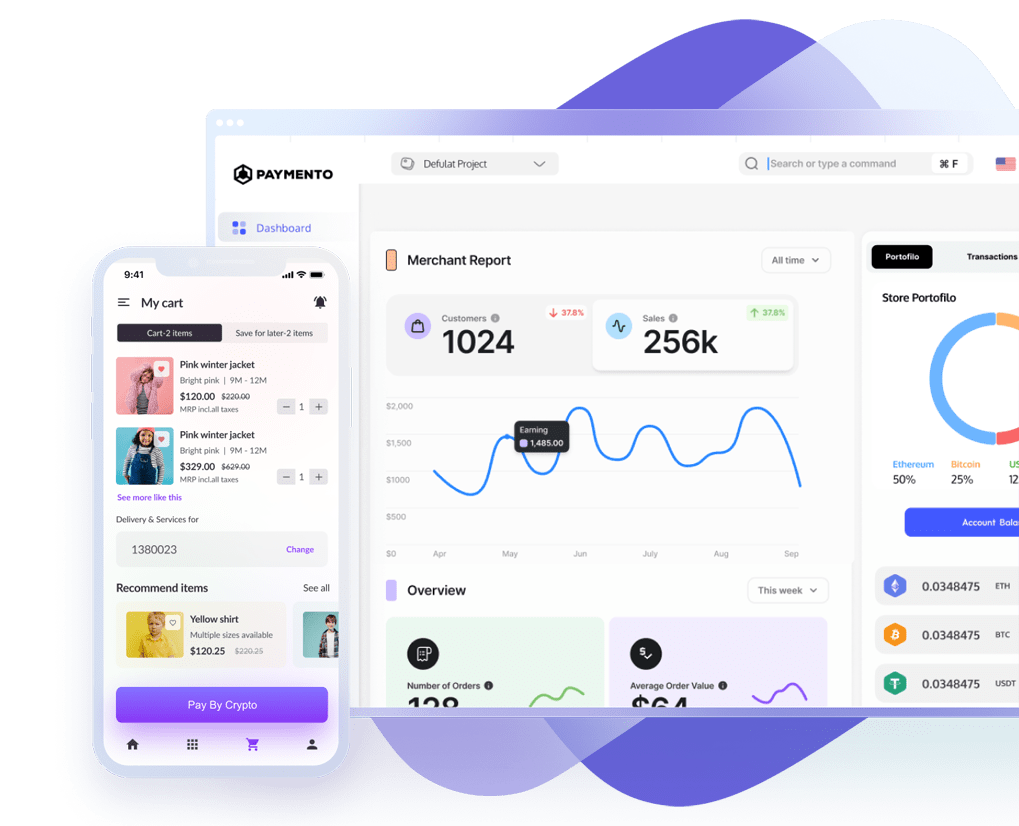
Digital commerce is evolving quickly. Traditional payment systems still dominate online transactions, but a parallel financial ecosystem is growing alongside them. Decentralized finance, blockchain-based assets, and crypto-native customers are no longer niche concepts. They are becoming part of mainstream digital trade.
This shift has created demand for a new category of infrastructure: Web3 merchant payment tools. These tools are designed to help businesses accept blockchain-based payments, interact with decentralized networks, and operate in a more open financial environment.
For merchants exploring digital assets, the question is not just whether to accept crypto. It is how to do so efficiently, securely, and in alignment with long-term strategy. This guide explains what Web3 merchant payment tools are, how they work, and why they matter for modern online businesses.
What Are Web3 Merchant Payment Tools?
Web3 merchant payment tools are platforms and integrations that allow businesses to accept cryptocurrency and blockchain-based payments directly from customers. Unlike traditional gateways that rely entirely on banks and card networks, these tools connect merchants to decentralized payment networks.
In practical terms, Web3 merchant payment tools can:
- Generate wallet addresses for transactions
- Verify blockchain confirmations
- Convert crypto into stablecoins or fiat if needed
- Integrate with e-commerce platforms
The defining characteristic is that they operate within the Web3 ecosystem, meaning they interact directly with blockchain protocols rather than solely through centralized financial institutions.
For businesses serving crypto-native customers, this infrastructure is increasingly relevant.
Why Merchants Are Exploring Web3 Payments
Consumer behavior is changing. A growing number of customers hold digital assets and prefer to spend them directly rather than converting back into traditional currency. At the same time, global e-commerce continues to expand across borders, creating friction in legacy payment systems.
Web3 merchant payment tools offer an alternative by enabling faster settlement and broader accessibility. Blockchain transactions can move across borders without traditional banking delays. In certain cases, transaction fees may also be competitive compared to international card processing.
Beyond efficiency, there is also a strategic element. Accepting crypto can signal innovation, attract a tech-forward audience, and position a brand within the digital economy.
However, adoption should be thoughtful rather than reactive. The value depends on customer demand and operational readiness.
How Web3 Merchant Payment Tools Work in Practice
From a customer perspective, the process is straightforward. At checkout, the buyer selects a crypto payment option. A QR code or wallet address appears, and the transaction is confirmed on the blockchain.
Behind the scenes, Web3 merchant payment tools handle the technical components. They monitor network confirmations, calculate equivalent fiat values in real time, and notify the merchant when payment is complete.
Some tools operate on a custodial model, temporarily holding funds before settlement. Others follow a non-custodial approach, sending payments directly to merchant-controlled wallets.
The merchant can typically choose whether to:
- Hold cryptocurrency
- Automatically convert to stablecoins
- Convert to local currency
This flexibility allows businesses to manage exposure to volatility while still participating in the Web3 ecosystem.
Benefits of Web3 Merchant Payment Tools
The advantages of Web3 merchant payment tools extend beyond simply accepting crypto.
One major benefit is global accessibility. Customers with digital wallets can transact without needing traditional bank accounts. This opens opportunities in regions where financial infrastructure is limited.
Another benefit is settlement speed. Depending on the blockchain network, transactions may confirm more quickly than cross-border bank transfers.
There is also reduced chargeback risk. Blockchain transactions are typically irreversible once confirmed, which can lower fraud-related losses for merchants.
Finally, Web3 integration supports brand positioning. For companies operating in digital services, NFTs, gaming, SaaS, or creator economies, accepting crypto can feel natural rather than experimental.
Still, these benefits must be weighed against operational responsibilities.
Challenges and Operational Considerations
Web3 merchant payment tools introduce new considerations that traditional systems do not.
Volatility remains a factor when accepting certain cryptocurrencies. Many merchants mitigate this by converting to stablecoins or fiat immediately.
Regulatory compliance is another key area. Tax treatment, reporting requirements, and crypto regulations vary by country. Businesses must ensure proper accounting practices.
Security also plays a central role. If using non-custodial solutions, wallet management and private key storage require careful planning. Even custodial providers require due diligence to assess reliability and solvency.
The technology itself is evolving. Blockchain networks can experience congestion, and fees can fluctuate depending on demand.
Adopting Web3 payments should be part of a broader strategy rather than a trend-driven decision.
Web3 Merchant Payment Tools vs. Traditional Payment Gateways
Traditional payment gateways rely on banks, card networks, and centralized clearing systems. They offer familiarity, consumer protection mechanisms, and established infrastructure.
Web3 merchant payment tools operate on decentralized networks. They prioritize transparency, self-custody options, and borderless transactions.
The two systems are not mutually exclusive. In fact, most merchants exploring Web3 do so alongside traditional payment methods. Offering multiple options expands customer reach without disrupting existing processes.
Diversification often makes more sense than replacement.
Who Should Consider Web3 Merchant Payment Tools?
Not every business needs Web3 integration. However, certain types of merchants may find strong alignment.
Digital-first brands, online stores with international customers, SaaS platforms, and creators operating in crypto communities are natural candidates. Businesses targeting tech-savvy demographics may also see strategic value.
On the other hand, companies serving primarily local audiences with no demand for crypto payments may not see immediate benefit.
Understanding your customer base is more important than following industry headlines.
The Future of Web3 Payments in Commerce
Web3 is still evolving, but its influence on digital infrastructure is expanding. Financial institutions, fintech startups, and enterprise platforms are experimenting with blockchain integrations. As usability improves, Web3 merchant payment tools may become more seamless and widely adopted.
Stablecoins, layer-two networks, and improved wallet interfaces are already addressing earlier barriers to adoption. Over time, the distinction between “traditional” and “Web3” payments may become less visible to consumers.
For merchants, early exploration can build familiarity without requiring full commitment. Gradual adoption allows businesses to learn and adapt as the ecosystem matures.
Conclusion: Infrastructure for a Changing Digital Economy
Web3 merchant payment tools represent an important development in modern commerce. They enable businesses to interact directly with blockchain networks, accept digital assets, and operate in a more decentralized financial environment.
They are not a universal solution, nor are they a shortcut to growth. Instead, they are part of a broader evolution in how value moves online.
For merchants willing to evaluate customer demand, manage risk thoughtfully, and prioritize security, Web3 merchant payment tools can provide flexibility and future-ready infrastructure in a rapidly changing digital economy.